Lemon Myrtle & Ginger: What's Actually in the Cup
Steep lemon myrtle, ginger and lemongrass together and the first question people ask is where the lemon is. There isn't one. Nothing in this blend comes from a lemon, or from any fruit at all. The citrus is coming from somewhere else entirely — a rainforest leaf, a root, and a grass — and once you know where, the tea becomes a considerably more interesting thing to drink.
A Leaf With More Citrus in It Than a Lemon
The lemon flavour in citrus fruit, and in most things we call "lemon-scented," comes down to a single compound: citral. Lemon oil, cold-pressed from the peel, carries roughly 2 to 3 per cent citral. Lemon myrtle leaf oil carries somewhere between 90 and 98 per cent. It isn't a subtle difference. Lemon myrtle is, by some distance, the most concentrated natural source of citral known — ahead of lemongrass, lemon verbena, and the lemon itself.
Backhousia citriodora is native to the subtropical rainforests of central and south-east Queensland, a genuine tree rather than a shrub or herb, and was given its botanical name in 1853 by the botanist Ferdinand von Mueller. Aboriginal Australians had already been using it, in food and medicine, for a long time before that. The food industry only began treating it as a commercial crop in the late 1980s and 1990s — new to the market, considerably less new to the country.

Why the Citrus Doesn't Taste Sour
Citral is responsible for the scent of lemon. It isn't responsible for the sourness — that's citric acid, an entirely separate compound, and lemon myrtle doesn't contain any meaningful amount of it. Which is why this tea tastes bright and citrus-forward without the sharp acidity of an actual lemon squeezed into hot water. Citrus scent and citrus acid are two different jobs, and lemon myrtle only does one of them.
What Ginger Is Actually Doing
The warmth ginger leaves at the back of the throat isn't a temperature. It's a signal. The mouth and throat carry receptors meant to detect actual heat — the ones that fire when a drink is too hot to swallow. Compounds in ginger bind to those same receptors and switch them on directly, no heat required. The nerve reports warmth because it's been told to, and the brain, with no way to check, takes it at face value.
Ginger's other well-documented effect is anti-inflammatory. A 2020 review of 109 randomised controlled trials found solid evidence that ginger (Zingiber officinale) reduces inflammation in the body — part of what's responsible for how unwell feels when you're unwell.
Lemongrass, Doing the Quiet Work
Lemongrass rarely gets credit for anything. In most of the cooking traditions that use it, the stalk goes into the pot, gives up its flavour, and gets fished out and discarded before serving. It isn't plated. Its entire job is to have been there.
In this blend, lemongrass sits in the middle — underneath the sharp lift of lemon myrtle, above the low warmth of ginger — filling in the body of the tea so the citrus doesn't taste thin. It's the ingredient most people wouldn't notice if it were missing, and the one that would be missed the most.

How We Blend It
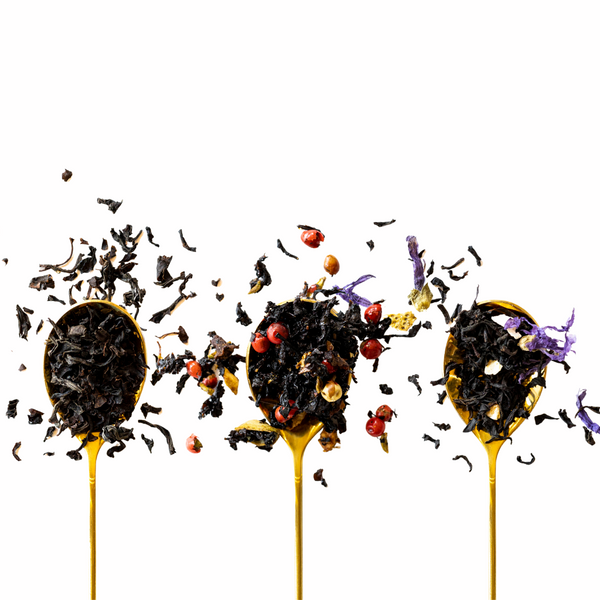
This is one of the more straightforward blends we make, and that's deliberate. Four ingredients — lemon myrtle, lemongrass, ginger and calendula petals — sourced from small farms and hand blended in small batches in Melbourne. Nothing added to round out the flavour, because nothing needed to be. Calendula goes in last, mostly for colour, with a faint honeyed edge of its own.

Brewing It
Hot: one teaspoon per 200mL cup, water at 100°C, four minutes. The same leaf will give a second, lighter infusion.
Iced: two heaped teaspoons per 200mL cup, 100°C water, ten minutes. Sweeten while the tea is still warm, if at all, then let it cool and pour over ice.

Lemon Myrtle & Ginger is available as a retail canister or a refill pouch, hand blended in Melbourne from organic ingredients.
We're also putting together a short audio companion to this blend — a few minutes to drink along to, before the day properly begins. It'll sit here once it's ready.
Sources
1. Southwell, I. Backhousia citriodora F. Muell. (Lemon Myrtle), an Unrivalled Source of Citral. Foods. 2021;10(7):1596.
2. Backhousia citriodora — botanical naming, Ferdinand von Mueller, 1853.
3. Anh N.H., Kim S.J., Long N.P., et al. Ginger on human health: A comprehensive systematic review of 109 randomized controlled trials. Nutrients. 2020;12.
4. Wilkinson J.M., Hipwell M., Ryan T., Cavanagh H.M.A. Bioactivity of Backhousia citriodora; Antibacterial and antifungal activity. J. Agric. Food Chem. 2003;51:76-81.