Impala & Peacock

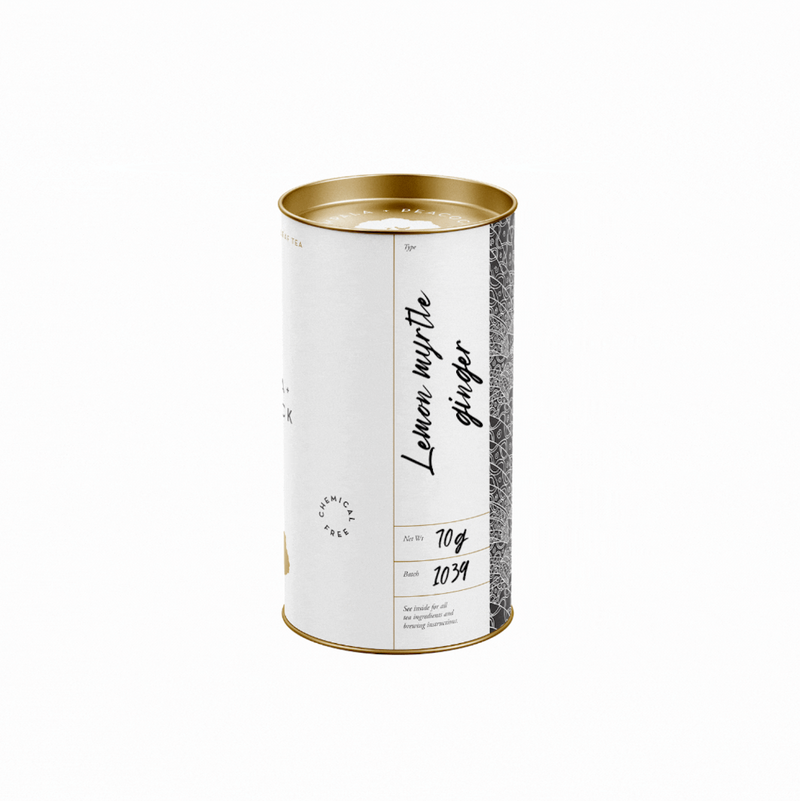
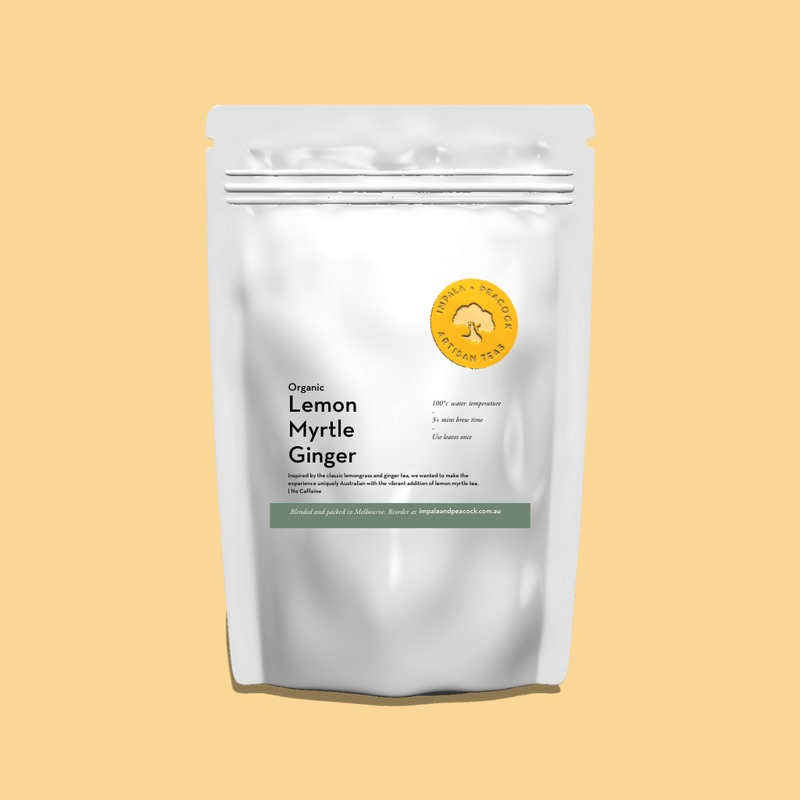
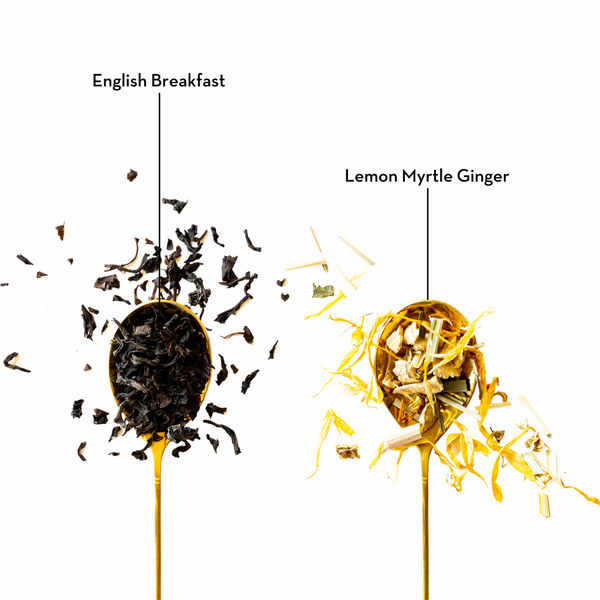
Lemon Myrtle & Ginger

$29.00

A citrus-forward infusion built around an ingredient most people have never tasted on its own: lemon myrtle, the leaf of a rainforest tree native to subtropical Queensland, carrying more citral — the compound responsible for a lemon's scent — than the lemon itself.

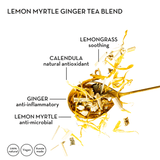
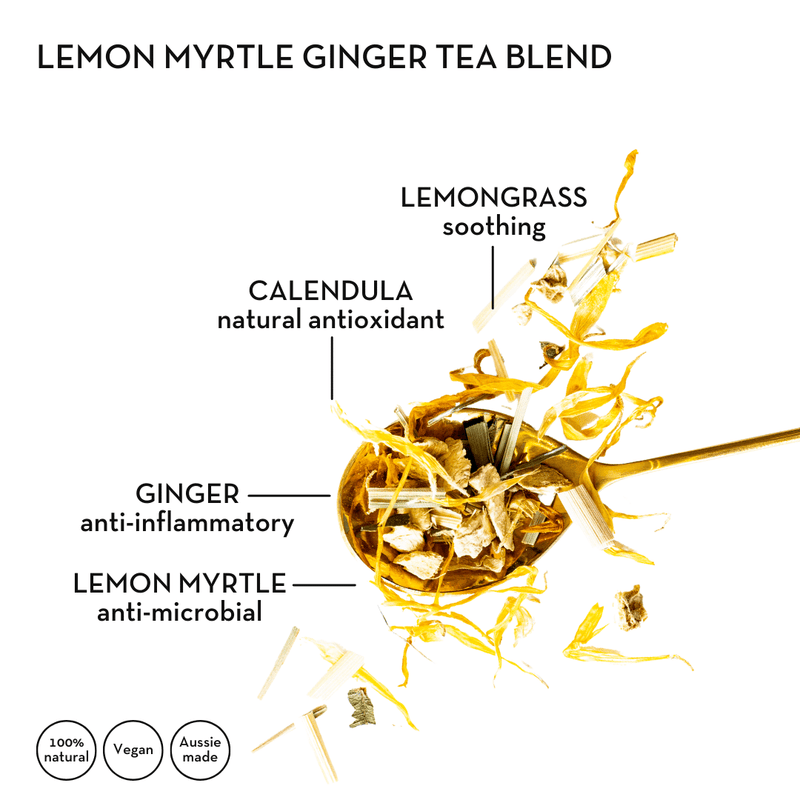
Lemongrass rounds out the brightness with a softer, grassier citrus underneath. Ginger settles in a beat later, warming the back of the throat rather than the front of the tongue. Calendula petals are folded through for colour.

The result is citrus without the acid — clean and sharp, with no fruit in the blend at all. Steeped hot, it sits close to a classic lemongrass and ginger tea with more lift. Steeped longer and served over ice, it holds its structure as well as anything in the range. 

Lemongrass and lemon myrtle have long been used for their antimicrobial properties, and to help ease cough and fever symptoms. A 2020 review of 109 randomised controlled trials found solid evidence that ginger (Zingiber officinale) reduces inflammation — part of what the body is responding to when unwell.

Shipping

Free Shipping over $90 (automatically applied at checkout). For orders under $90, standard Australian Post charges apply (approximately $10 depending on total weight). 

1 tsp to 200mL cup

100°C degree water temperature

4 min steep (the same leaf can be used for 2 infusions)

To Make an Iced Tea:
2 heaped teaspoons to 200mL cup
100° C, 10 min steep time
Add sweetener (sugar, agave, or honey) to taste while warm (but not hot)
Allow to cool and serve over ice with fresh fruit garnish.

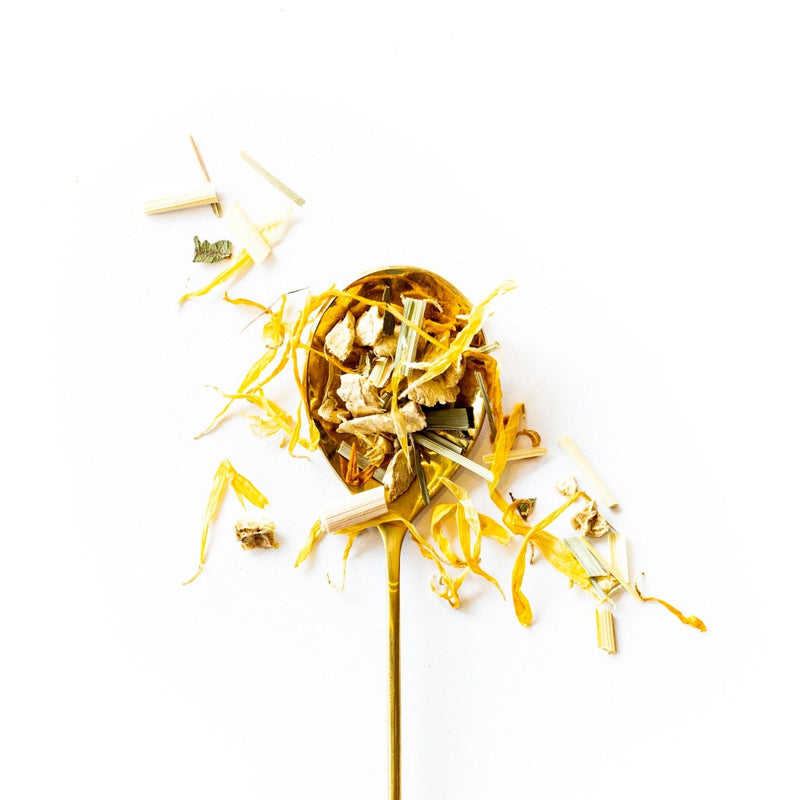
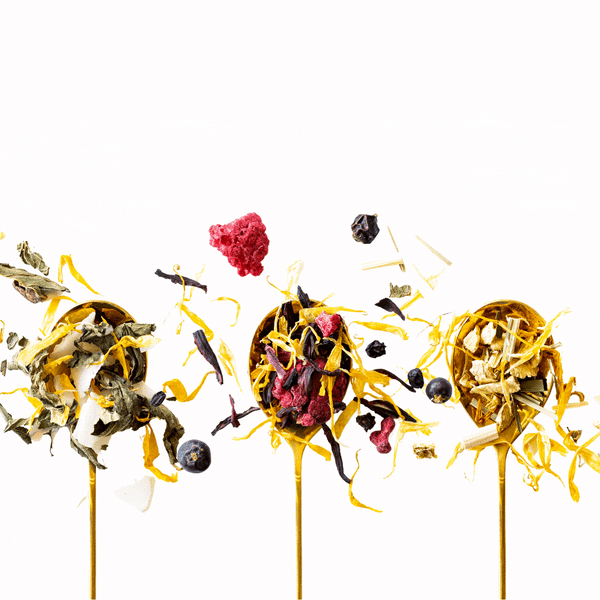
Lemongrass, lemon myrtle, ginger and calendula petals

(all products are organic)

A 2006 literature review [4] concluded that Calendula (also known as Marigold) could offer skin protection against UV radiation, inflammation and potentially acne (note that these were animal or in-vitro studies not human trials, but findings are promising).

1. Nambiar V., Matela H., Potential Functions of Lemon Grass (Cymbopogon citratus) in Health and Disease. Int. J. of Pharmaceutical and Biological Archives. 2012; 3(5):1035-1043. [ResearchGate]
2. Anh N.H., Kim S.J., Long N.P., Min J.E., Yoon Y.C., Lee E.G. Ginger on human health: A comprehensive systematic review of 109 randomized controlled trials. Nutrients. 2020;12 [PMC free article] [PubMed] [Google Scholar]
3. J.M. Wilkinson, M. Hipwell, T. Ryan, H.M.A. Cavanagh. Bioactivity of Backhousia citriodora; Antibacterial and antifungal activity. J. Agric. Food Chem., 51 (2003), pp. 76-81. DOI: 10.1021/jf0258003 [PubMed]
4. Sun-Yup Shim, Ji-Hyun Kim, Kang-Hee Kho, Mina Lee, Anti-inflammatory and anti-oxidative activities of lemon myrtle (Backhousia citriodora) leaf extract,Toxicology Reports,Volume 7,2020,Pages 277-281. doi.org/10.1016/j.toxrep.2020.01.018
5. Basch E., Bent S., Foppa I., Haskmi S., Kroll D., Mele M., Szapary P., Ulbricht C., Vora M., Yong S. Marigold (Calendula officinalis L.): an evidence-based systematic review by the Natural Standard Research Collaboration. J Herb Pharmacother. 2006;6(3-4):135-59. doi: 10.1080/j157v06n03_08. [PubMed]

You may also like

Recently viewed